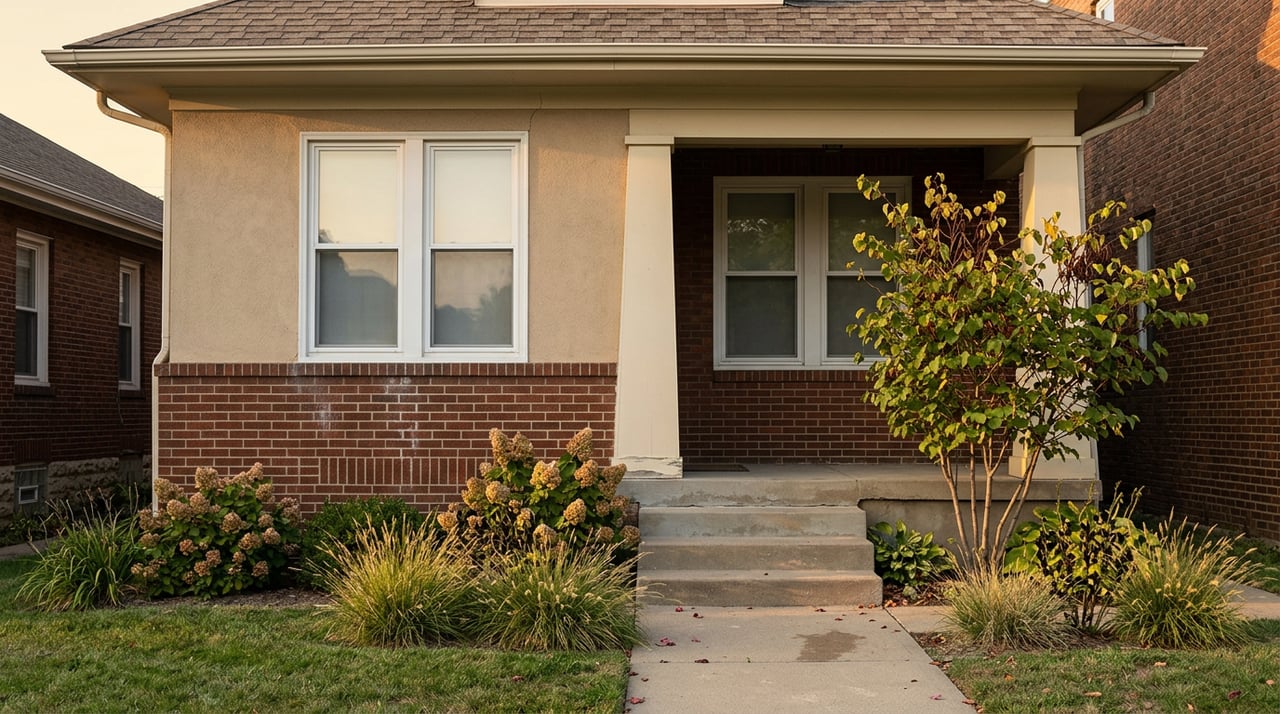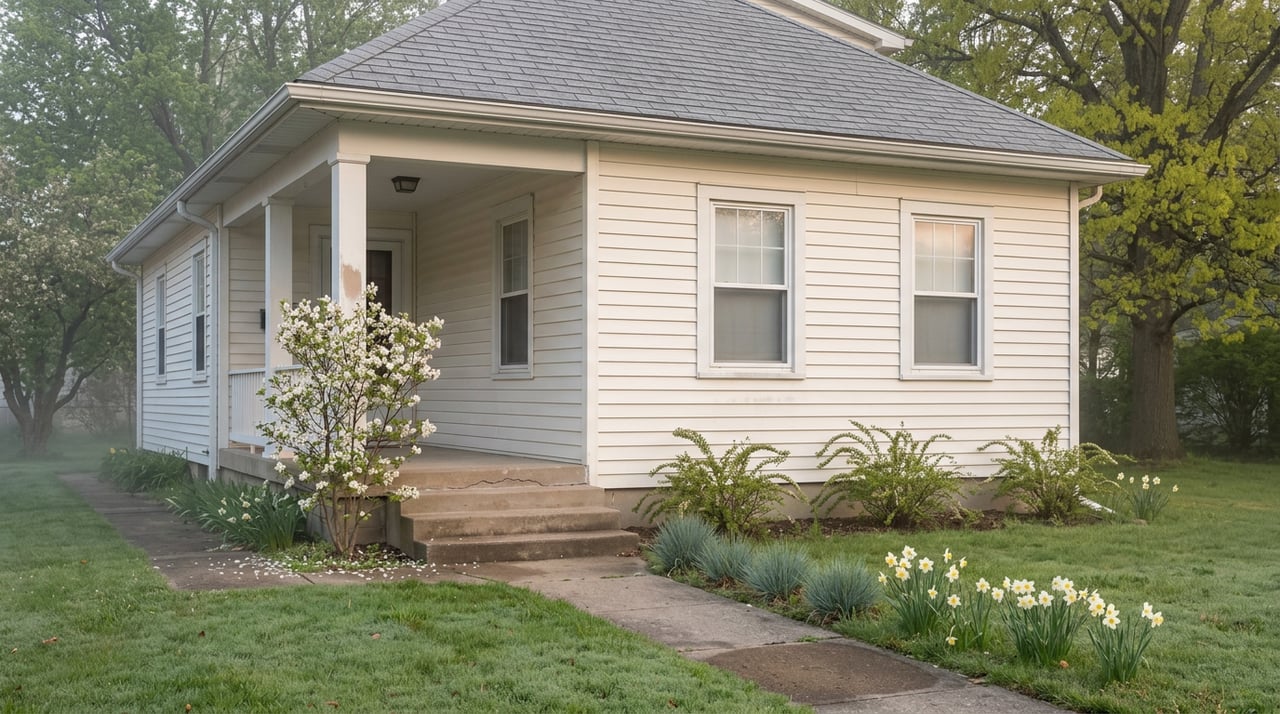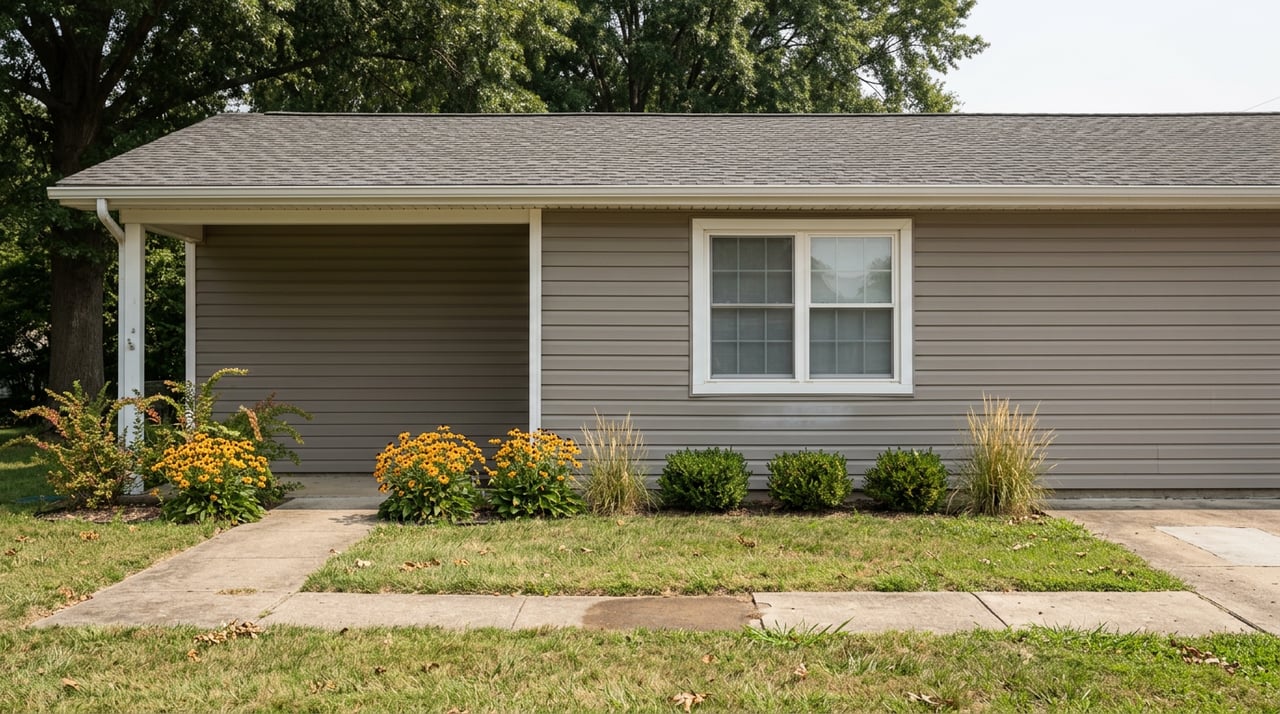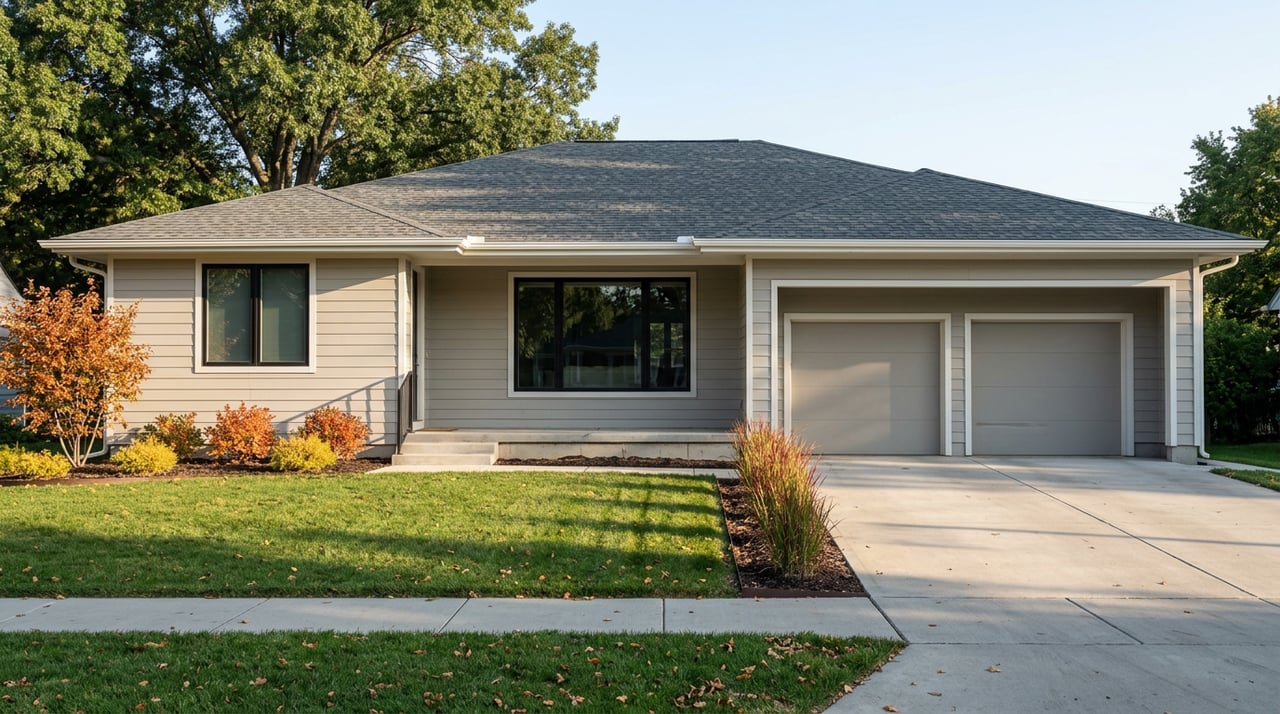
So which number is actually Gary's home price: $124,000, or $450,000?
Both are true, and that's the problem. Search for Gary home prices this month and the portals will hand you a tidy figure: a citywide median of $124,000, with homes moving at around $88 a square foot as of August 2026. It's a real number, pulled from actual closings, and for a lot of Gary's housing stock it's a fair description of what a buyer will pay. But drive three miles to the Miller Beach area, where the city's transit development district is actively pulling in new construction, and you'll find single-family homes now breaking ground in the $450,000s, according to Gary Mayor Eddie Melton. That's not a typo and it's not a different city. It's the same city limits, and the citywide median simply doesn't reach it.
If you're comparing Gary against other Lake County towns using the number you saw on a listing site, you're comparing against a blend that doesn't describe the neighborhood you're actually looking at.
What the citywide median is actually averaging
Gary's median sits low because most of its housing stock does. Redfin's data for the three months ending in May 2026 put the citywide median sale price at $119,000, and the broader Indiana market research site Resideline pegged Gary at $124,050 in closings, the cheapest entry point among Indiana's higher-volume markets. That's the number driving most of the "affordable Midwest city" coverage Gary gets, and it holds up as a description of the bulk of the city's inventory, particularly older housing stock inland from the lake.
What it doesn't hold up as is a description of Miller, the lakefront neighborhood that sits at Gary's northeastern edge along Lake Michigan and borders Indiana Dunes National Park. Redfin's neighborhood-level data for Miller showed a median sale price of $227,000 in February 2026. Homes.com's twelve-month trailing figure for the same neighborhood came in at $249,900. Movoto's May 2026 snapshot showed a median list price of $265,000 at $140 a square foot, nearly double the citywide per-square-foot figure.
Line them up and the gap is not a rounding error:
| Measure | Gary citywide | Miller / Miller Beach |
|---|---|---|
| Median sale price | $119,000 (3 months ending May 2026) | $227,000 (Feb 2026) |
| Median list price | $124,000 (Aug 2026) | $265,000 (May 2026) |
| Price per square foot | $88 (Aug 2026) | $140 (May 2026) |
| Typical time on market | 76 days (Aug 2026) | 55 to 69 days, depending on month |
A neighborhood inside Gary is routinely trading at double the citywide median, and moving faster while it does it. That's not noise. That's a second market operating under a different set of rules, sitting inside one city limit.
Why the lake changes the math
Part of the premium is obvious once you're standing there. Miller Beach borders Indiana Dunes National Park, runs along the southern shore of Lake Michigan, and has built a genuine arts and dining identity around Lake Street, anchored by the Miller Beach Arts & Creative District, which got its start when local volunteers renovated the old Miller Drugstore building using a donation from the family of Marshall J. Gardner. Gene Ayers, who owns Ayers Realtors, a family business that has operated in the area for more than a century, described the draw to a local homes guide this way:
"There are 6.1 miles of beach here that are either part of a national or municipal park."
Ayers also pointed to the mix of older and newer housing stock and the direct rail connection, noting that the commute to Chicago from the neighborhood runs around 40 minutes.
But lake views and a farmers market don't fully explain why builders are pricing new construction at $450,000 in the Aetna section of Miller right now. That part is policy, not scenery.
The part that's actually engineered
Indiana's General Assembly created transit development districts specifically to capture rising property value near South Shore Line stations and use it to help fund the rail investment that's driving that value up in the first place. Gary has two of these districts, one around the Miller station and one around the downtown Gary Metro Center station, and the state and regional partners involved are explicit that the goal is exactly what's happening: land near the tracks becomes worth more, and some of that new value pays back into transit.
The numbers behind that bet are public. The Northern Indiana Commuter Transportation District and the Northwest Indiana Regional Development Authority have projected a combined $1.5 billion in investment tied to South Shore Line expansion in the region over roughly two decades. Near the Miller station specifically, Mayor Melton has said 45 single-family homes are currently under construction in the Aetna section of the district at price points in the $450,000s, with a 60-unit building also planned for south Lake Street. Downtown, Gary's own Metro Center station is slated for a full replacement, with $6 million a year committed for 25 years toward rebuilding it into a modern multimodal hub.
None of that shows up in a citywide median. A blended average can't distinguish between a neighborhood where the public sector is actively subsidizing new construction and one where it isn't.
The mistake buyers are making right now
Here's where the confusion compounds. The South Shore Line opened a genuinely new branch on March 31, 2026, called the Monon Corridor, running from Hammond Gateway station south to a new terminus at Munster/Dyer, with additional stops at South Hammond and Munster Ridge along the way. It's a real, well-covered milestone for the region, and it's easy to assume it's part of what's driving Gary's transit story.
It isn't. The Monon Corridor branches off at Hammond and serves Hammond, Munster, and Dyer exclusively. It does not run through Gary at all. Gary's transit advantage comes from a separate, older piece of infrastructure: the original Lakeshore Corridor stations at Miller, Gary Metro Center, and Gary/Chicago Airport, which already benefited from the Double Track project completed in May 2024. That project added a second track between Gary and Michigan City, which allowed NICTD to add 14 additional weekday trains and cut delays on that stretch of line. If you're researching Gary and see headlines about the new southern branch, that's a different corridor serving different towns. The relevant transit story for Gary predates it by two years.
What this actually means if you're comparing towns
A citywide median is a useful floor, not a ceiling, and definitely not a map. If you're pricing a lakefront property in Miller against Gary's $124,000 headline figure, you'll misprice it by a factor of two or more before you've even toured the house. If you're evaluating Gary against a neighboring Lake County town on affordability alone, the honest comparison depends on which few square miles of Gary you're actually talking about, because the city contains both the cheapest housing in the county and a construction pipeline pricing in the $450,000s at the same time.
The more useful signal than either median is where the new construction is going. Builders don't put up $450,000 homes speculatively in a market they think is flat. The Aetna and Lake Street activity around the Miller station is the clearest indicator available right now of where the district-level investment is actually landing, and it's a better forward-looking read than a blended citywide average that's mostly describing older inland inventory.
A few questions worth settling directly
Does the new Monon Corridor train serve Gary? No. It runs from Hammond Gateway to Munster/Dyer and serves Hammond, Munster, and Dyer. Gary's South Shore stations are on the separate Lakeshore Corridor, which runs through Miller, Gary Metro Center, and Gary/Chicago Airport.
Why is Miller Beach so much more expensive than the rest of Gary? A combination of genuine amenity, lakefront access and national park proximity, and deliberate public investment through a transit development district designed to capture and reinvest rising land value near the Miller station.
Is the new $450,000 construction actually inside Gary? Yes. It's in the Aetna section, which sits within the Miller transit development district inside Gary's city limits, not a separate suburb.
If you're weighing a purchase near the lake or trying to figure out what a citywide number actually tells you about a specific block, that's exactly the kind of local read a portal can't give you. Favela Homes works these neighborhoods directly, in English and Spanish, and can walk you through what a given price point actually buys block by block. Get a Cash Offer Now, or reach out if you're comparing Gary neighborhoods before you buy.